
How does your research methodology impact methods?
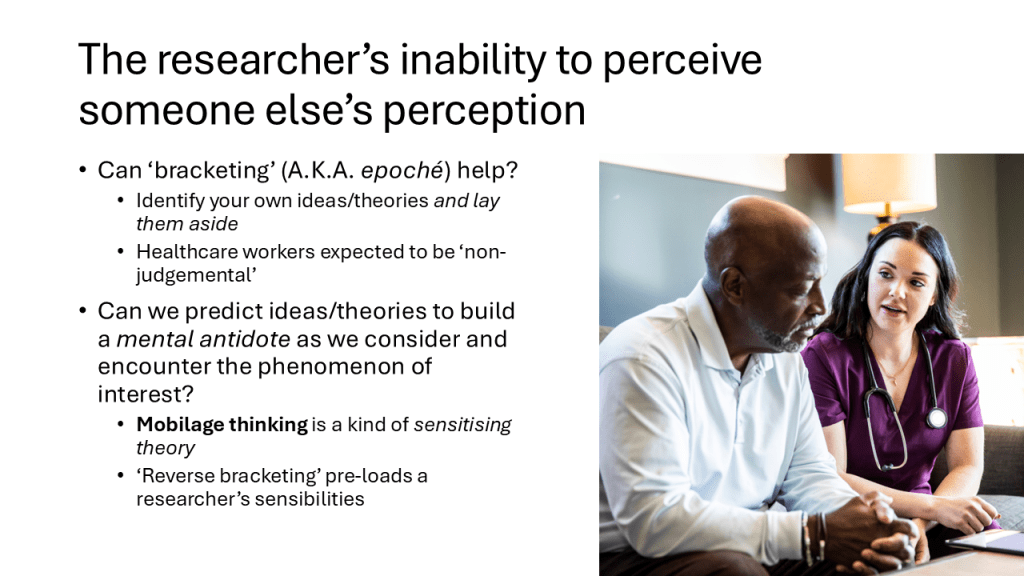
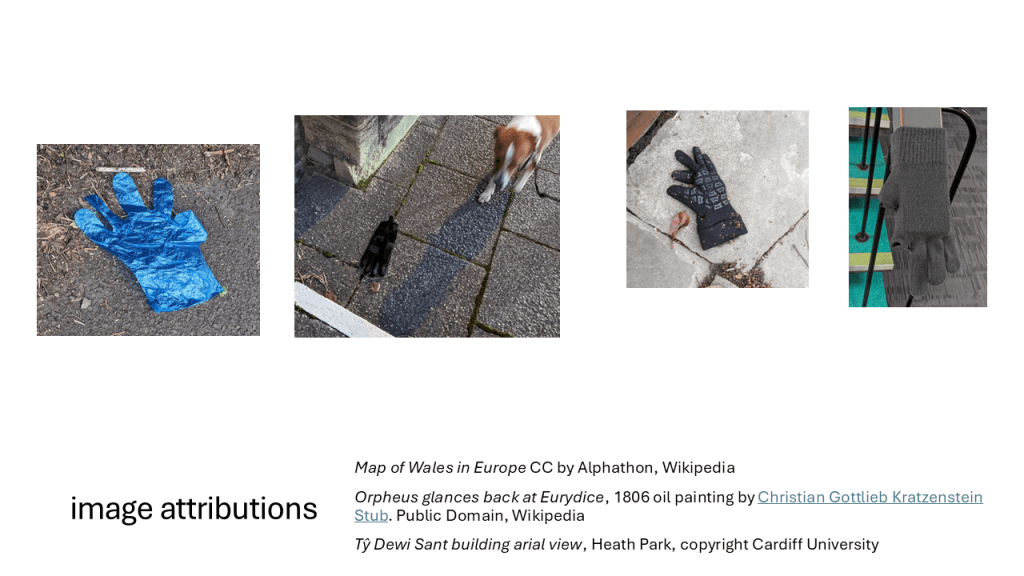
This blog has been rather quiet for various reasons but, as we are cruising towards the next Networked Learning Conference (NLC), the time is ripe (if not very overdue) to share some media, including the video (poor sound though sorry), from my ‘short paper’ presentation in Malta 2024, slides as images below. I’ve hosted the video on archive.org because there are less concerns about big tech profiteering over there, however this also may mean the video does not play, or not play smoothly for you. There’s a link to the submitted paper below.
We at hanfod.NL have some exciting plans for the coming conference and I’ll share more in another post.
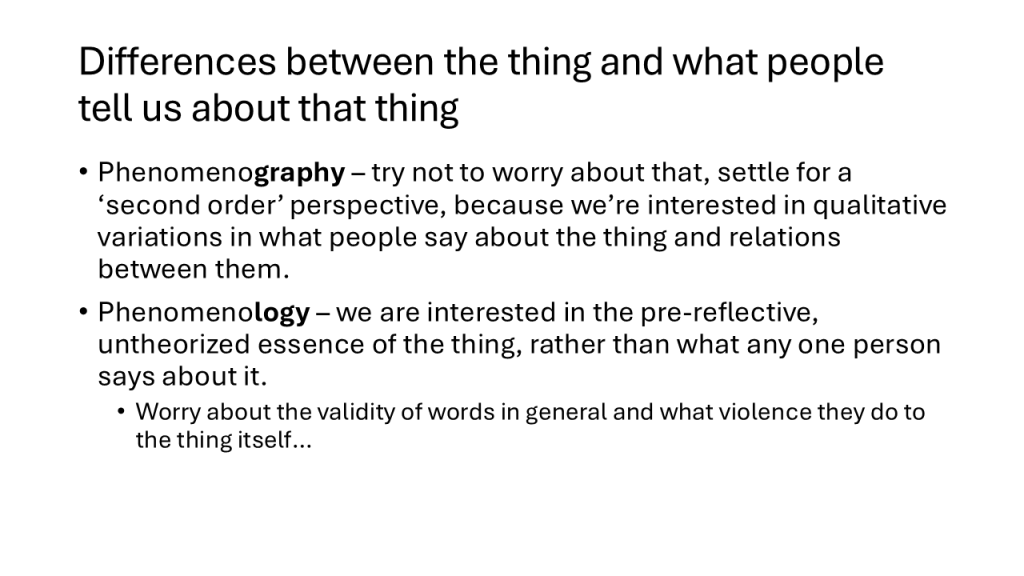
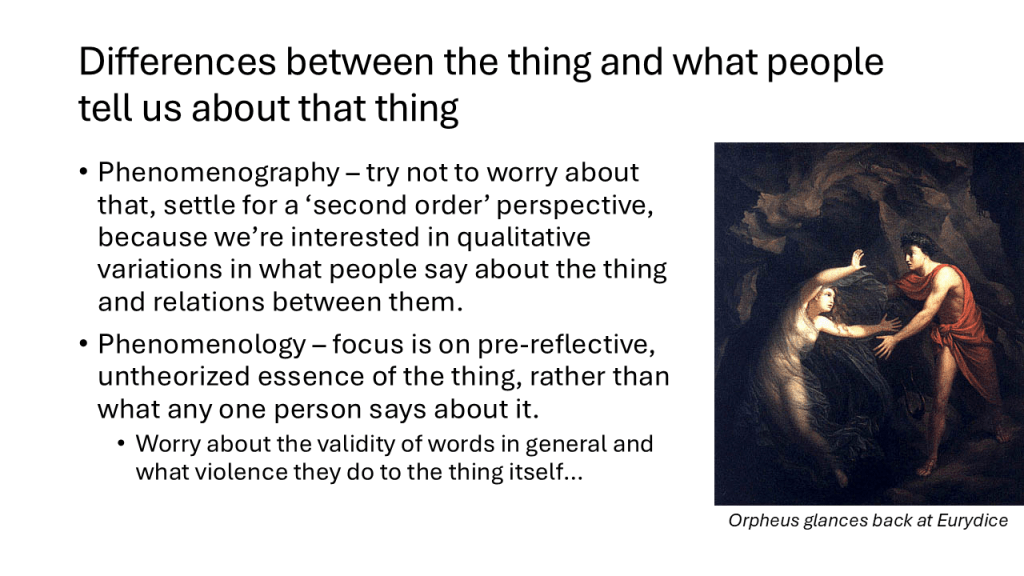
Read more: Mike’s paper at NLC 2024 MaltaThe paper highlights one of the key methodological insights from my doctoral thesis and recent book chapter. At the conference, in short form, the paper was a provocation, as much as anything, trying to encourage researchers to reflect on what exactly they think they have when they gather data. In many areas of research it is presumed that data will be collected, analysed, and presented. However, there are so many assumptions made all along that method. One thing that phenomenology teaches us is that there is a gap between some thing and what we notice about it, and probably even more drift between the thing and what other people tell us about it. Phenomenologists try to account for this gap by focusing on the phenomena, rather than the person’s individual experience of that phenomena (which should ring alarm bells for readers who want phenomenology to be ‘ideographic’, focusing on an individual’s experience). This is why we have ‘bracketing’: we may wish to try and exclude some thoughts as polluting my conscious distilling of the essence of a phenomenon. To whatever extent this may be possible, my paper suggests that we may also wish to actively pre-load our thinking as we approach data gathering. If human science values the human researcher as the premiere research instrument, more attention could be given to the researcher’s frame of mind in those epic moments when phenomena are encountered.
Johnson, M. R. (2024). Mobilage thinking and empirical encounters: Data gathering and analysis of networked learning experiences. Proceedings of the International Conference on Networked Learning , 14(1). https://doi.org/10.54337/nlc.v14i1.8087

 hanfod.NL