
Seminar 5th July 1-2pm with Dr Kyungmee Lee

Before leaving for Seoul, Kyungmee is visiting us in Wales and we’re delighted to link her up with Cardiff University’s School of Social Sciences Educational Research Seminar Series. We’re meeting in-person at the Glamorgan Building Council Chamber and online through Zoom (joining link). There’s no need to register if you wish to join.

The title of her talk will be ‘Educational Researcher (and Machine) in the Posthuman Era: Methodological Reflections.

There has been increasing enthusiasm for and conversation on machine-assisted research innovation in the broad field of education and social sciences. This seminar will provide a brief overview of popular claims—both positive and negative—about fast-emerging posthuman conditions; and unpack some of the dominant discourses of innovative machine-assisted research approaches. The ‘back-to-person’ and ‘back-to-basic’ methodological approaches, exemplified by autoethnography and evocative academic writing, will be discussed as a critical alternative approach to rethinking machine-assisted research and researchers.

Who is Kyungmee??
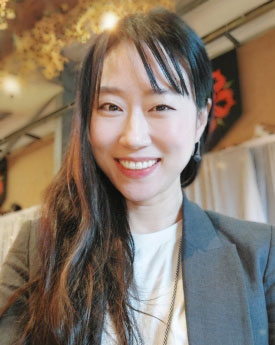
Senior Lecturer in the Department of Educational Research at Lancaster University. Kyungmee is a co-editor of Studies in Technology Enhanced Learning. Her research targets the intersection of online education, adult education, and international education concerning issues of accessibility and inclusivity. Using a range of qualitative research methodologies and evocative academic writings, her current projects investigate the academic experiences of diverse non-traditional student groups in distance education settings. Kyungmee’s scholarship emphasises concepts of discourse, knowledge and power, understood through a broadly Foucauldian lens.

Phenomenology of Practice in full colour

Felicity and I are deeply grateful for Professor Michael van Manen’s seminar yesterday. Prior organisation was a little stilted by email, and the announcement somewhat belated. Nevertheless, we were encouraged by the turnout, a respectful group of almost 50 tuned in. Michael gracefully took us through an illustrated tour of phenomenology of practice, with reference to the ‘Classic Writings’ book and his own research related to his work as a neonatologist.

Professor van Manen presenting

Michael kindly allowed us to record the presentation although his use of many evocative images makes it impossible to share very widely. If you would like to view, please get in touch with us using the info@hanfod.NL email address.

Here are references shared in the seminar:

Networked Learning Editorial Collective (NLEC) et al. 2021. Networked Learning in 2021: A Community Definition. Postdigital Science and Education 3(2), pp. 326–369. doi: 10.1007/s42438-021-00222-y.

van Manen, Max 2016. Researching lived experience: human science for an action sensitive pedagogy. Second Edition. London New York: Routledge, Taylor & Francis Group.

van Manen, Michael 2012. Carrying: Parental Experience of the Hospital Transfer of Their Baby. Qualitative Health Research 22(2), pp. 199–211. doi: 10.1177/1049732311420447.

van Manen, Michael 2018. Phenomenology of the Newborn: Life from Womb to World. 1st edition. New York: Routledge.

van Manen, Michael and van Manen, Max 2021. Classic writings for a phenomenology of practice. New York: Routledge. Available at: https://public.ebookcentral.proquest.com/choice/publicfullrecord.aspx?p=6280232 [link to CU Library record]

I stopped recording at the start of the question/discussion part to help everyone feel less inhibited. I have anonymised and reproduced the four questions and answers here though:

Continue reading “Phenomenology of Practice in full colour”

Webinar 14 Sept 22, 2pm (UK): Michael van Manen

We are thrilled to announce a webinar featuring Michael van Manen (University of Alberta profile page). Endowed Chair in Health Ethics, Michael is the Director of the John Dossetor Health Ethics Centre, and an Associate Professor in the Department of Paediatrics.

Michael van Manen

In just over three weeks time, on 14th September, Michael has very kindly agreed to rise early to help us understand phenomenology of practice from his perspective as a neonatologist (see webinar abstract below). We have scheduled 60 minutes for the presentation, leaving 30 more for questions and discussion.

Image: DrParthShah, CC BY-SA 4.0 https://creativecommons.org/licenses/by-sa/4.0, via Wikimedia Commons

Among other notable contributions, Michael recently collaborated with his father, Max, to publish Classic Writings for a Phenomenology of Practice. This is an important work to support and demonstrate the heritage of the Phenomenology of Practice approach, also documented in the 2021 paper Doing Phenomenological Research and Writing.

A link to Michael’s recent discussion of Medical Ethics is offered below.

Webinar Abstract: Phenomenology of Practice: Ethics, Phenomenology, Value
What does it mean to do phenomenology directly on the phenomena that we live?

What distinguishes phenomenology as a method compared to other human science traditions?

How may phenomenology offer relevance and value to professional practitioners such as teachers, nurses, doctors, social workers, or other caring professions?

Phenomenology does not have to be an impenetrable philosophy but instead may be realized as a method to sensitively explore and explicate everyday human experiences.

Such understandings offer insights into the everyday ethics implicit in the practices of practitioners.

In this talk, I will discuss the tradition of phenomenology of practice, and the intersections of ethics, phenomenology, value, and technology at the hand of several health research projects. I hope to show the value of phenomenology for practice and also the value of practice for phenomenology.

We do hope you will join us on the day. Please email info@hanfod.nl for the Zoom joining link or download this ics calendar file. We hope to record the session so you can catch up if you are unable to attend online.