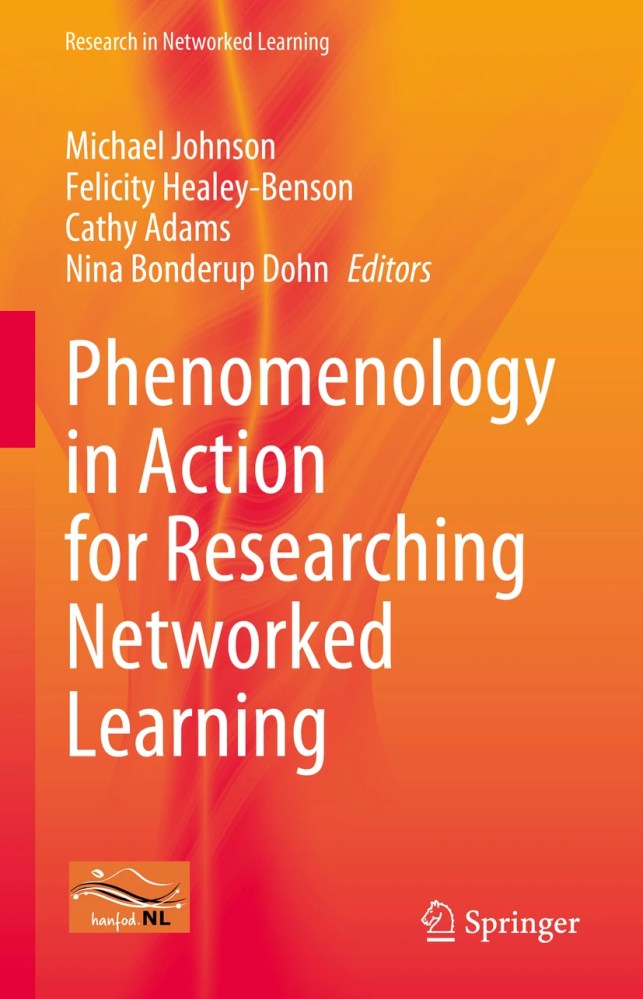
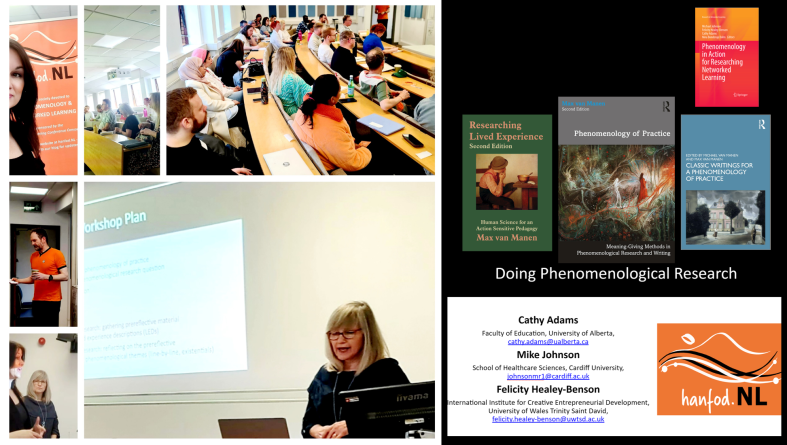
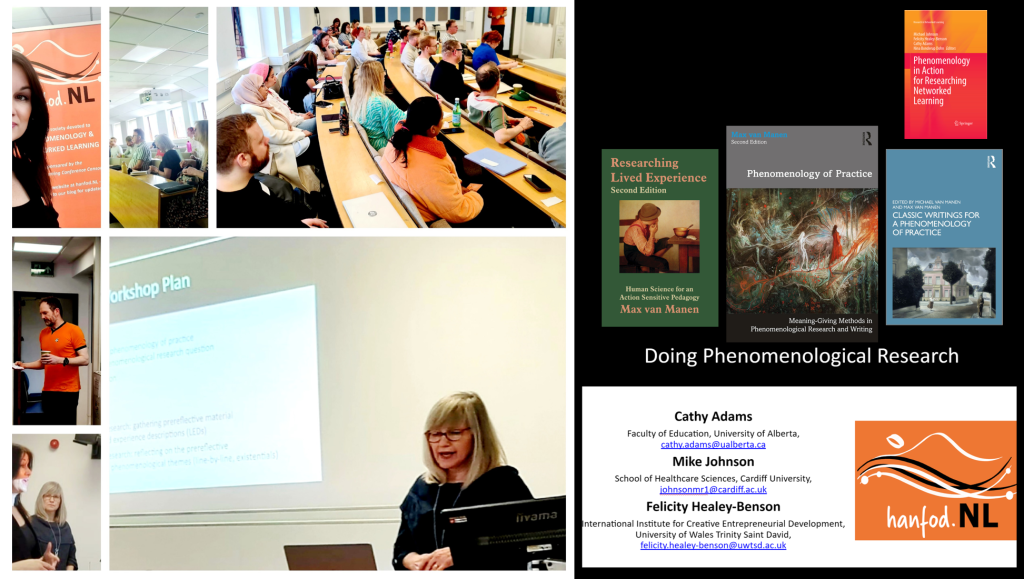
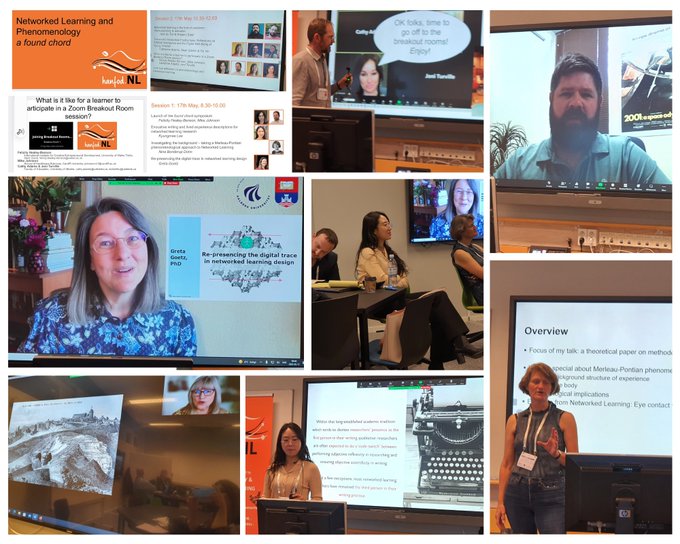
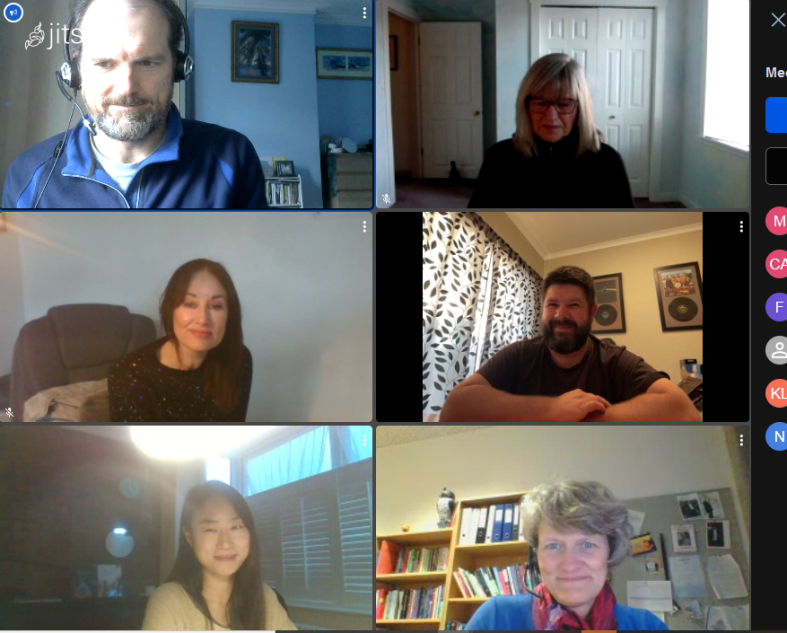
The recent roundtable discussion on our forthcoming Springer book Phenomenology in Action for Researching Networked Learning at the 14th International Networked Learning Conference hosted by the University of Malta was an enriching experience. As editors and authors, Mike, Cathy, Nina, and I were humbled by the thoughtful perspectives and valuable insights shared by our esteemed roundtable discussants.
Dr Maria Cutajar of the University of Malta began with comments that underscored the depth and rigour demanded by phenomenological inquiry, while also acknowledging its transformative potential. She emphasised the book’s invitation to think more deeply about our experiences as humans in an increasingly digital world.
Professor Mark Vagle, dialling in from Minnesota, appreciated the book’s nuanced engagement with different phenomenological approaches, highlighting its recognition of phenomenology as plural. He commended the framing questions that guided each section, drawing attention to the emphasis on what phenomenological investigations can reveal and how phenomenology can challenge networked learning.
Professor Lesley Gourlay’s reflections resonated deeply. She spoke about the importance of slowness, stillness, and attending to the ineffable aspects of experience – qualities that phenomenology can help surface. Lesley highlighted the book’s potential to push back against the transhumanist ethos and open up new ways of understanding lived experiences in educational contexts.
Professor Emeritus Vivien Hodgson, a pioneering figure in networked learning, raised thought-provoking questions about the relationship between phenomenology and autoethnography, and the possibilities of integrating creative non-fiction writing techniques. Her insights shed light on how phenomenological approaches could enable richer, more empathetic understandings of lived experiences.
The discussants’ reflections reinforced our belief in the value of phenomenological perspectives for researching networked learning. Their insights have further inspired us to continue exploring the roles, possibilities, and challenges of using phenomenology to understand the complexities of human experiences in digital learning environments.
We are grateful for the engaging discussion and the opportunity to share our work with the networked learning community in Malta. We were also very excited to have some of our contributing authors join us in person – Associate Professor Kyungmee Lee, Seoul National University and Professor Greta Goetz, Belgrade University.
As we move forward, we hope this book will serve as a catalyst for more phenomenological inquiries, deepening our understanding of the lived experiences that shape and are shaped by networked learning practices. We now look forward to the official publication month this year, and to communicate our online event to celebrate with you and our full complement of book contributors. We hope also to share with the Postdigital Science and Education Journal, facilitated by Professor Petar Jandric, Zagreb University.
Felicity, on behalf of Dr Mike Johnson, Professor Cathy Adams, & Professor Nina Bonderup Dohn.
Maria Cutajar PhD is a Senior Lecturer in Arts, Open Communities and Adult Education at the University of Malta.
Mark D. Vagle PhD is a Professor at the University of Minnesota, USA. He has written extensively on phenomenological research in journals such as Qualitative Inquiry
Lesley Gourlay PhD is a Professor of Education, University College London.
Vivien Hodgson PhD is an Emeritus Professor of Networked Management Learning at Lancaster University Management School.














 hanfod.NL